
Quick answer: For most finished basements in Cornwall and SD&G, luxury vinyl plank (LVP) is the best all-round flooring. It is 100% waterproof, warm underfoot over a subfloor and costs about $6–$10 per sq ft installed in 2026. Epoxy suits gyms, workshops and laundry areas. Carpet tiles work for family rooms and bedrooms, and porcelain tile is best for basement bathrooms. Avoid solid hardwood and standard laminate below grade. Whatever you choose, test the slab for moisture first.
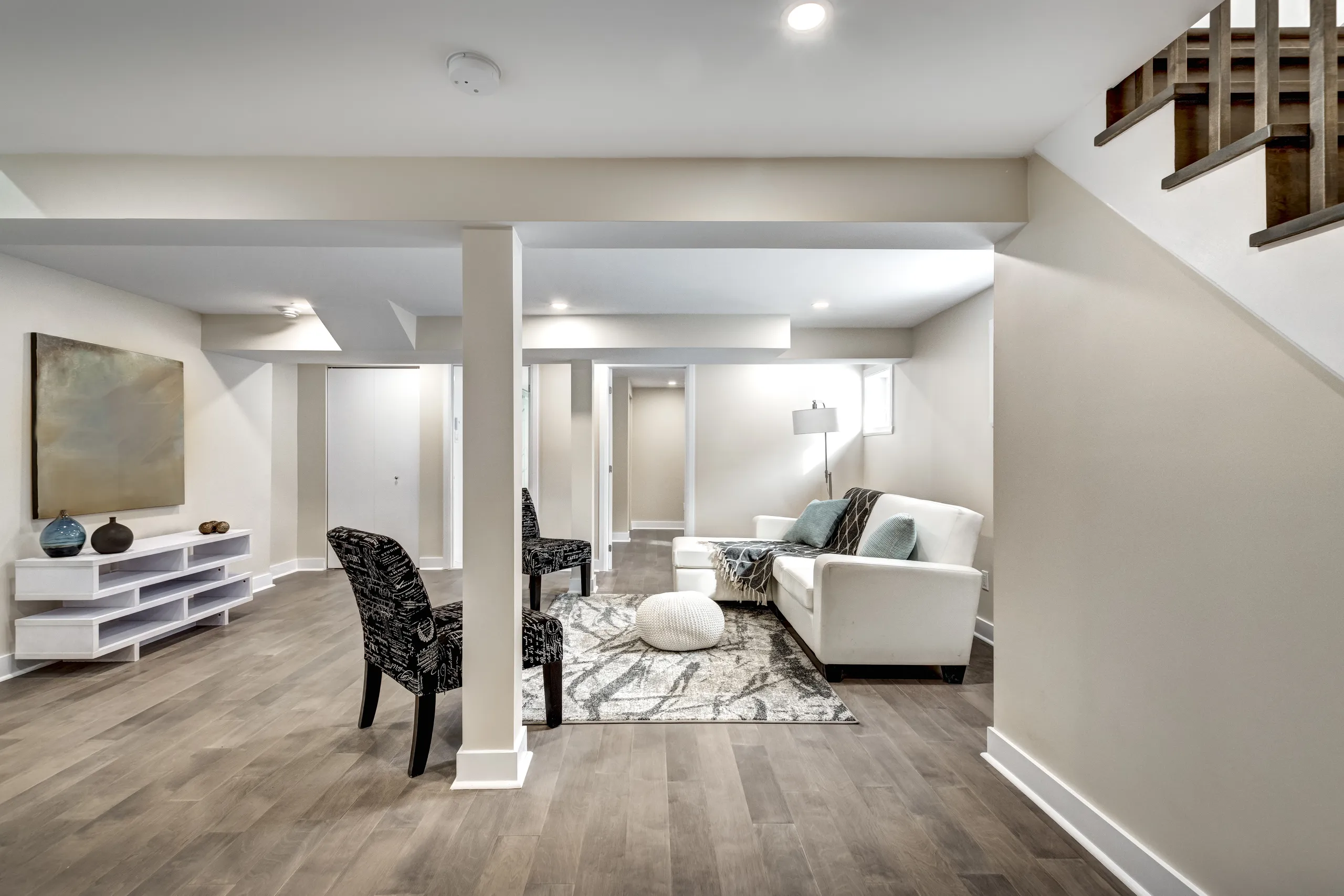
A basement floor sits directly on concrete, which is cold, slightly damp and rarely perfectly flat. Flooring that looks great upstairs can warp, smell or fail down here. Picking the right material is the difference between a basement that feels like the rest of the house and one that always feels like a basement.
This guide compares the most common basement flooring options and explains how to prepare the slab so the floor lasts.
Start With the Slab: Test for Moisture
Before choosing a floor, find out how much moisture comes through your concrete. A simple test anyone can do:
Tape a 24″ × 24″ square of clear plastic sheet tightly to the bare slab on all four sides.
Leave it for 48–72 hours.
Check underneath. Droplets on the plastic or darker concrete mean moisture is coming up through the slab.
If you see moisture, the floor needs a vapour-control layer or a dimpled membrane subfloor, and any water sources should be investigated. Our guide to basement leaks explains common causes. A persistent musty smell is another warning sign; see how to get rid of a musty smell in the basement.
Basement Flooring Options Compared
The table compares the most popular options. Costs are typical installed prices for Cornwall and SD&G in 2026, not including subfloor systems.
Flooring | Moisture tolerance | Comfort and warmth | Installed cost per sq ft | Best for |
|---|---|---|---|---|
Luxury vinyl plank (LVP) | Excellent (waterproof) | Good, better over a subfloor | $6–$10 | Most living areas |
Epoxy coating | Excellent | Hard and cool | $5–$12 | Gyms, workshops, laundry, storage |
Carpet tiles | Fair (tiles can be lifted and dried) | Very warm and soft | $4–$8 | Family rooms, kids’ play areas, bedrooms |
Porcelain tile | Excellent | Cold unless heated | $12–$20 | Bathrooms, entry areas, laundry |
Engineered hardwood | Fair, needs a subfloor | Warm, natural feel | $10–$16 | Dry basements with premium finishes |
Rubber flooring | Excellent | Cushioned | $5–$10 | Home gyms |
Luxury Vinyl Plank: The Default Choice for Most Basements
LVP has become the most popular basement flooring for good reason. Rigid-core planks (SPC or WPC) are waterproof through the whole plank, so a minor leak or spill won’t ruin them. They click together as a floating floor, which tolerates the small slab imperfections typical of basements.
Modern LVP convincingly imitates wood or stone, and planks with an attached acoustic pad feel softer and quieter. For best comfort, install LVP over an insulated or dimpled subfloor rather than directly on concrete.
Tip: Choose a wear layer of at least 12 mil for a family room and 20 mil for heavy traffic or pets.
Epoxy Floors: Durable and Easy to Clean
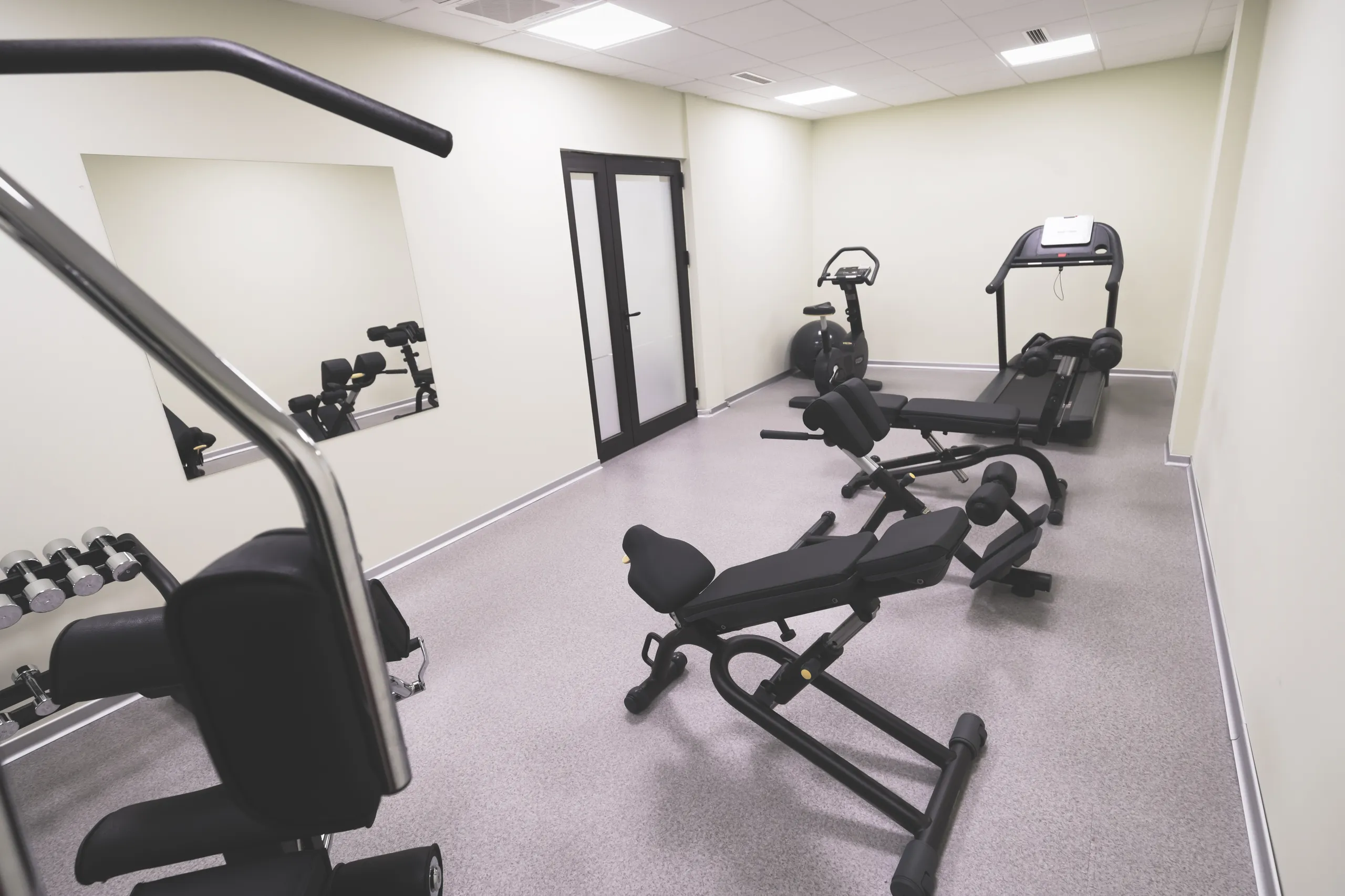
An epoxy floor is a resin coating bonded directly to the concrete. It is seamless, waterproof and nearly indestructible. That makes it a great fit for a home gym, workshop, laundry room or storage area.
Epoxy feels hard and cool underfoot, so it is less suited to bedrooms and lounges unless you add area rugs. Proper surface preparation is essential. The slab is ground or etched, cracks are filled, and the coating is applied in multiple layers. Moisture coming up through the slab can make epoxy peel, which is why the moisture test matters.
Carpet and Carpet Tiles: Warmth for Living Spaces
Carpet is the warmest and quietest choice, which many families want in a basement TV room or kids’ playroom. Wall-to-wall carpet is risky if your basement has ever had water, because the pad holds moisture.
Carpet tiles are the smarter basement option. If one section gets wet or stained, you lift those tiles, dry or replace them and put them back. Pair carpet with a subfloor or a moisture-resistant pad for extra warmth.
Tile: Best for Basement Bathrooms and Laundry
Porcelain tile is fully waterproof and handles anything a bathroom or laundry room can throw at it. It is cold on its own, but adding an electric in-floor heating mat makes it the most comfortable floor in the house during an Eastern Ontario winter.
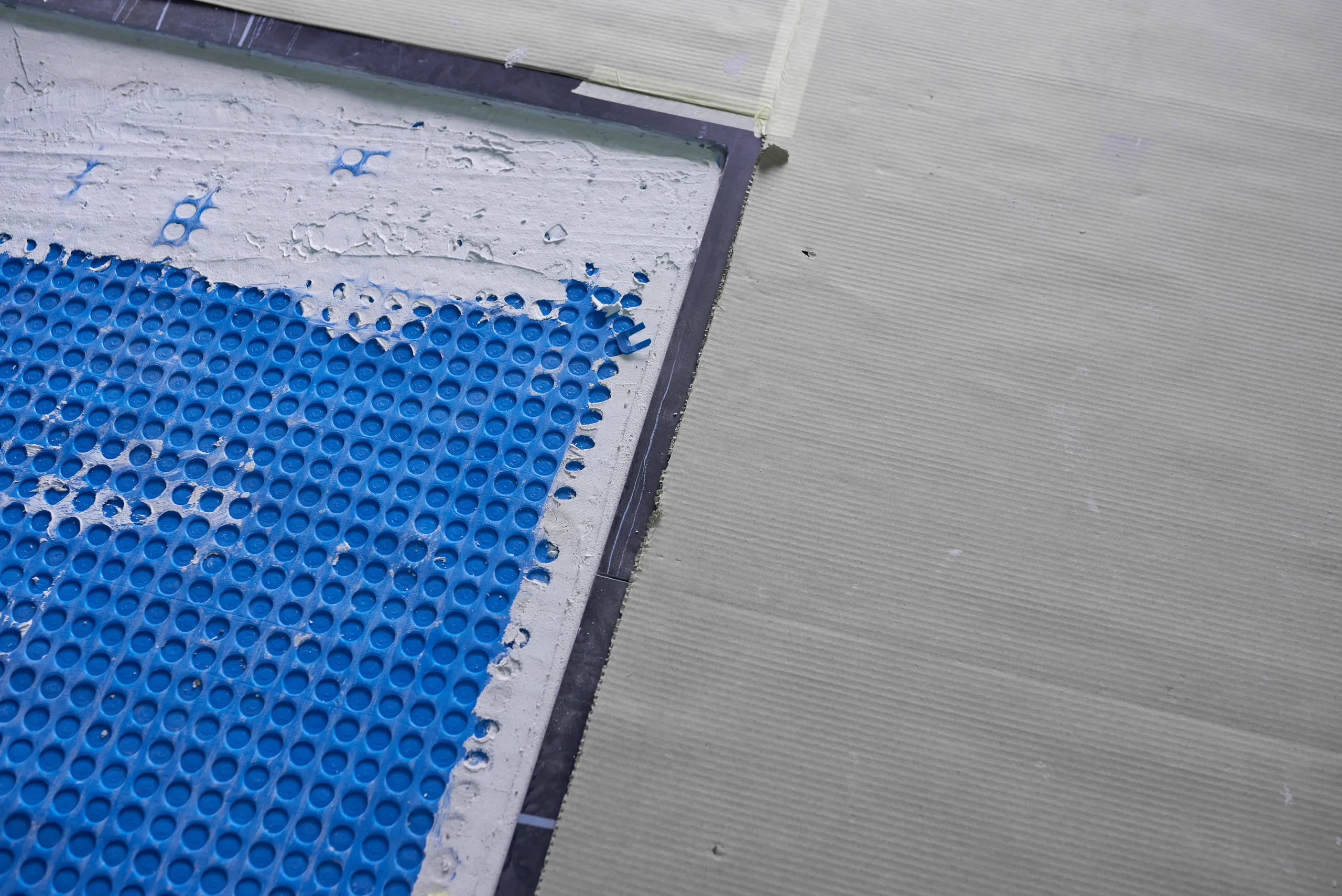
Tile needs a flat, stable surface. An uncoupling membrane between the slab and tile helps prevent cracks if the concrete moves slightly.
Engineered Hardwood: Possible, With Precautions
Solid hardwood should not go in a basement: it swells and cups with humidity changes. Engineered hardwood is more stable because of its layered construction. It can work in a dry basement over a proper subfloor with humidity kept between 35% and 55%.
It is the most expensive of the common options and the least forgiving if water ever gets in. For most families, high-quality LVP gives a similar look with less risk.
What to Avoid in a Basement
Solid hardwood: too sensitive to moisture and humidity swings
Standard laminate: the fibreboard core swells when wet, though some newer waterproof laminates are an exception
Wall-to-wall carpet directly on concrete: traps moisture and can develop odours
Glue-down flooring on an untested slab: moisture can break the adhesive bond
Basement Flooring Underlayment and Subfloors
What goes under the floor matters as much as the floor itself. There are three common approaches:
Underlayment or subfloor | What it does | Added cost per sq ft |
|---|---|---|
Vapour-barrier underlay (6 mil poly or a combination pad) | Blocks slab moisture under floating floors | $0.50–$1.50 |
Dimpled membrane subfloor panels | Creates an air gap so the slab can breathe; adds warmth | $3–$5 |
Insulated subfloor (rigid foam + plywood) | Adds R-value and a solid base for any flooring | $4–$7 |
In Cornwall basements, a dimpled or insulated subfloor makes a noticeable difference in comfort. It also protects the floor from minor moisture events. It raises the floor by about 1–1.5″, which must be planned around doors, stairs and ceiling height.
How Much Does Basement Flooring Cost Overall?
For a 700 sq ft finished basement, typical totals in 2026 are:
LVP over a vapour-barrier underlay: about $4,500–$7,500
LVP over a dimpled subfloor: about $6,500–$10,500
Epoxy coating: about $3,500–$8,500
Carpet tiles over a subfloor: about $5,000–$9,000
Flooring is one part of a larger basement budget. Our basement renovation cost guide shows how it fits with framing, insulation, electrical and finishes.
Mixing Floors in One Basement
Many basements work best with more than one floor type. A common combination is LVP in the main living area, porcelain tile in the bathroom and laundry, and epoxy or rubber in a gym or workshop. Using a consistent colour palette and matching transitions keeps the space looking unified.
Get Basement Flooring Installed Right
Millennial Contracting installs basement flooring as part of full basement renovations and as stand-alone projects across Cornwall, Long Sault, Ingleside and SD&G. We test the slab, recommend the right subfloor and install the finished floor, backed by a 3-year warranty.
Learn more about our flooring installation services in Cornwall and our basement renovation services, or see a finished project: the Wellington basement renovation.