
Understanding the Investment: Sunroom Cost Factors in Eastern Ontario
A sunroom addition isn’t a flat-rate project. Sunroom cost in Ontario depends on design choices, site conditions, and materials, and Cornwall’s climate narrows some of those choices. Here’s what affects the cost of a sunroom addition in Ontario:
- Size and square footage – the biggest driver, because more footprint means more foundation, glazing, framing, and labor.
- Material durability – aluminum, wood, and vinyl all behave differently through an Eastern Ontario winter.
- Glazing type – single, double, or triple pane glass affects both upfront cost and comfort.
- Foundation requirements – footings in Cornwall must go at least 48 inches below grade, adding cost compared to warmer regions.
Material Quality and Insulation Levels
Aluminum conducts cold – a standard kit sunroom becomes uncomfortable and expensive to heat once the temperature drops. Thermally broken frames fix that by interrupting the conduction with an insulating barrier. Add proper wall insulation (spray foam or rigid board) and the space works year-round.
Glass type matters too. Double-pane is the minimum requirement for a four-season sunroom in Ontario, while triple-pane offers better performance. Low-E coatings manage heat gain in summer and retain it in winter, which is well worth it in a climate with real extremes.
Architectural Integration and Roof Style
A shed roof is the simplest and cheapest option. A gabled roof works better with the existing home, but takes longer to frame. A glass roof lets in the most light and is the most expensive, and it also requires stronger framing and careful waterproofing.
The roof tie-in is where labor costs can skyrocket. Cutting into an existing roofline and getting the flashing and insulation right takes time. The more complex the existing roof, the more it adds.
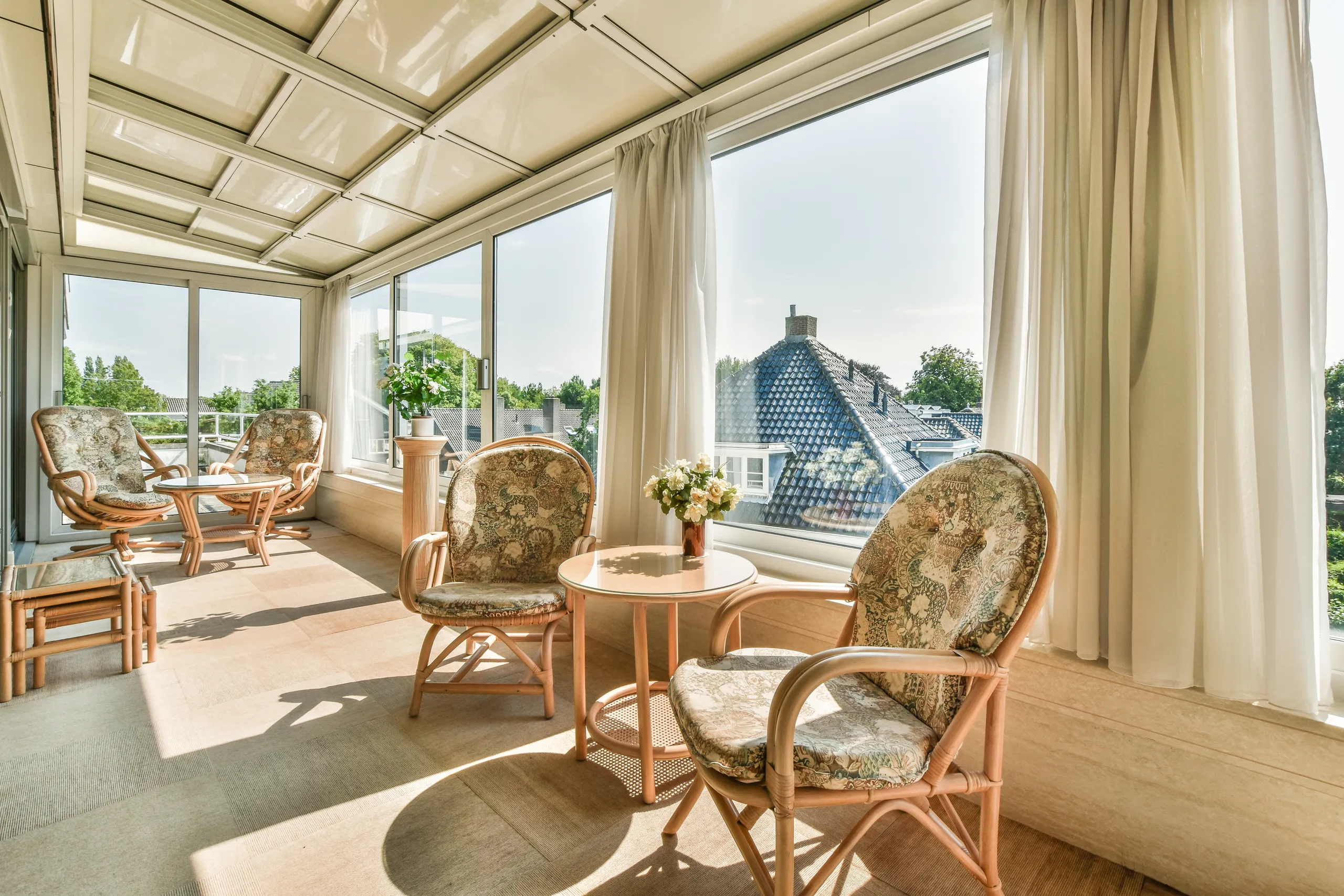
Three-Season vs. Four-Season Sunrooms: Comparing Costs and Utility
The choice between the two comes down to how many months you actually want to use the space and what you’re willing to spend to make that happen.
Feature | Three-Season | Four-Season |
Usage Months | Spring through fall (~7-8 months) | Year-round |
Average Cost | $40,000-$60,000 | $60,000-$100,000+ |
Insulation | Minimal, with single-pane glazing, uninsulated walls | Full, with double or triple-pane, insulated walls and ceiling |
HVAC Needs | None required, portable heater optional | Full HVAC integration or a dedicated mini-split is required |
The Three-Season Option: Budget-Friendly Relaxation
A three-season sunroom keeps out bugs, rain, and wind without the insulation and HVAC costs of a full four-season build. In Cornwall, that’s a usable window of roughly April through October, perfect for a comfortable morning coffee, dining, or as a reading spot. It’s not meant for winter use, and heating one through an Eastern Ontario January just isn’t practical. If you’re planning to use it during warmer months, that’ll be enough.
The Four-Season Addition: Year-Round Living Space
A four-season sunroom is built like any other room; it just has more glass. Double-pane low-E glass is the minimum for Cornwall’s climate. Thermally broken frames and full insulation keep it comfortable without overworking the heating system. The foundation goes 48 inches below grade, the same as the main house. HVAC gets extended, or a mini-split gets added. When done right, it becomes a genuine extra room.
Breaking Down the Pricing: What to Expect in 2026
Cornwall is closer to Ottawa than Toronto on labor and material costs, but frost depth and snow load requirements mean structural costs don’t drop as much as you might expect. Know your budget before talking to contractors, and explore financing options early if the scope is more than what you have upfront.
Typical 2026 ranges:
- Entry-level three-season – $40,000-$60,000 for a standard 12×12 with a solid roof and single-pane glazing.
- Mid-range four-season – $60,000-$100,000 with low-E glass, thermal breaks, insulation, and HVAC.
- Premium glass conservatory – $100,000-$150,000+ with custom glazed roof and high-end finishes.
Beyond the Structure: Additional Costs and Site Preparation
The quoted build price rarely covers everything. In Cornwall’s climate, the foundation is the most critical part because footings that aren’t deep enough will shift, and everything above them will follow. If the sunroom connects to a larger outdoor space, a custom deck builder may be needed to tie everything together.
Costs that may not show up in the initial quote:
- Foundation excavation – site prep, drainage, and concrete before framing starts.
- Electrical wiring – dedicated circuits, outlets, and lighting.
- Flooring materials – tile, hardwood, or heated floors.
- Custom blinds and shades – essential for managing heat in a glass-heavy space.
Foundation and Deck Reinforcement
Building on an existing deck sounds like a shortcut, but it rarely works. Most decks are built on footings sized for a deck load, not a fully enclosed structure with a loaded roof. An engineer needs to assess it before anything is built on top of it.
The Ontario code requires frost footings for permanent structures to be at least 48 inches below grade. If the existing deck doesn’t meet that depth, new footings get poured first.
Electrical, HVAC, and Interior Finishes
A four-season sunroom needs its own heat source. A ductless mini-split provides heating and cooling in one unit for $3,000-$8,000 installed, making it the most practical option in most cases. Baseboard heaters cost less upfront but are pricier to run. Either way, a dedicated electrical circuit is required.
For flooring, tile and luxury vinyl plank handle temperature changes better than hardwood. Budget $3,000-$8,000 depending on material and size, plus trim and paint on top. And don’t forget a buffer of at least 10% on top.
Navigating Permits and Regulations in Cornwall, ON
Four-season builds always require a permit, while three-season rooms may sometimes be built without a sunroom permit Ontario. Millennial Contracting handles the process from start to finish and can advise you on whether you need a permit. Here’s how it works:
- Site plan approval – placement, setbacks, and lot coverage confirmed upfront.
- Building permit application – drawings and engineering submitted to Cornwall’s Building Division.
- Structural inspections – footing, framing, and insulation checked before walls close.
- Final sign-off – completed build inspected and approved before occupancy.
Is a Sunroom Worth It? Evaluating ROI and Home Value
Compared to other home additions, sunroom ROI varies more in terms of its impact on property resale value. Three-season rooms return about 50-70% of their cost, while four-season rooms do better at 60–80% since they count as conditioned living space in an appraisal.
Buyers notice the extra space and light, and it makes the home easier to sell. It won’t recover every dollar, but a well-integrated build that looks like part of the house looks better and can get you better deals.